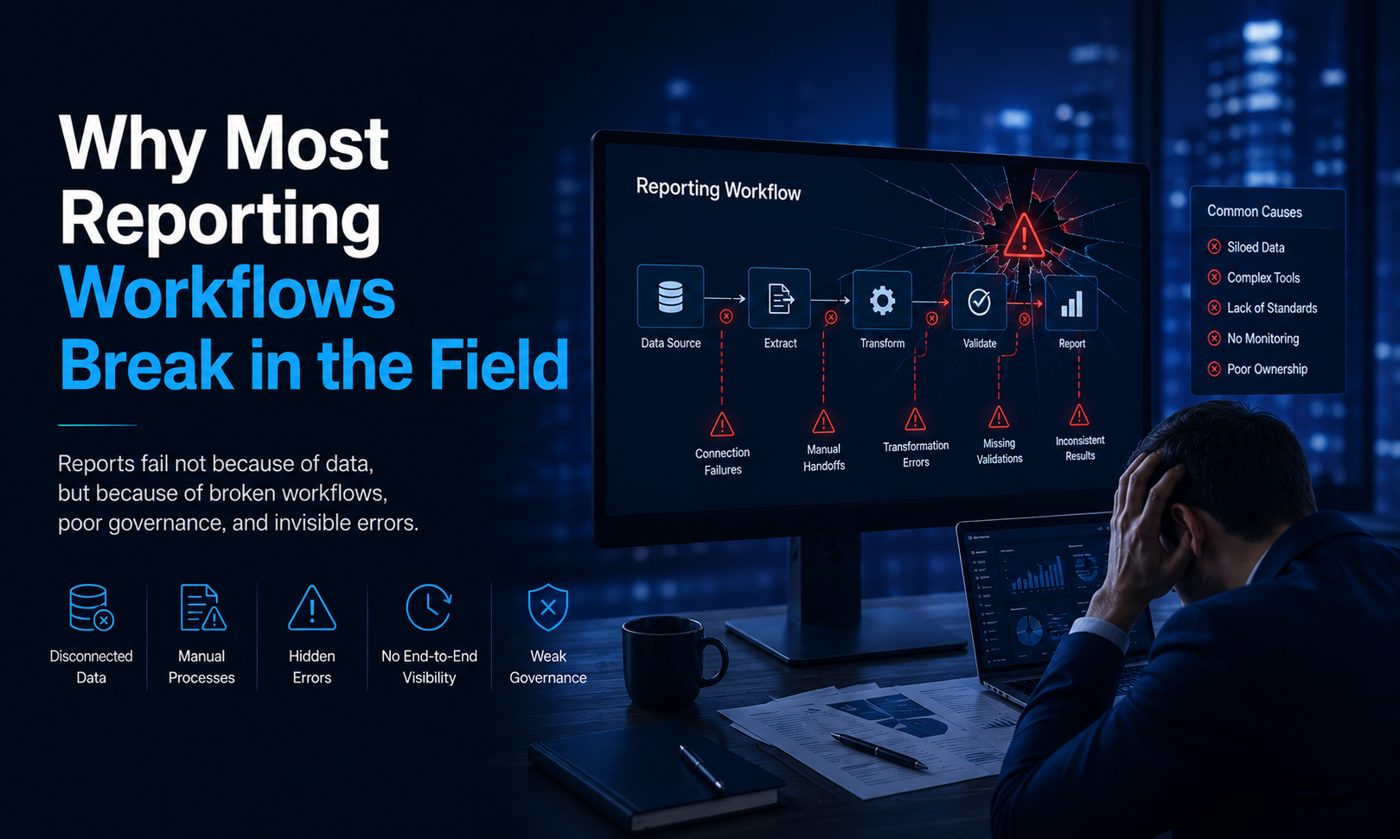
The field reality is different from the reporting template
Reporting workflows often fail because tools are designed from the office perspective only. Field teams face connectivity issues, changing program needs, time pressure, and unclear instructions. If the workflow does not match that reality, data quality suffers.
Definitions drift over time
Even when a reporting template starts clearly, definitions can drift. Teams may interpret indicators differently, modify Excel files, or create informal workarounds. Without governance, reports become difficult to compare.
Manual consolidation creates hidden errors
Copying files, merging sheets, renaming columns, and adjusting formulas manually can introduce silent errors. These errors are hard to detect because they often appear after several reporting cycles.
Better workflows reduce pressure
Strong reporting workflows reduce the burden on teams by clarifying data ownership, automating repetitive steps, validating records early, and making reporting outputs easier to reproduce.