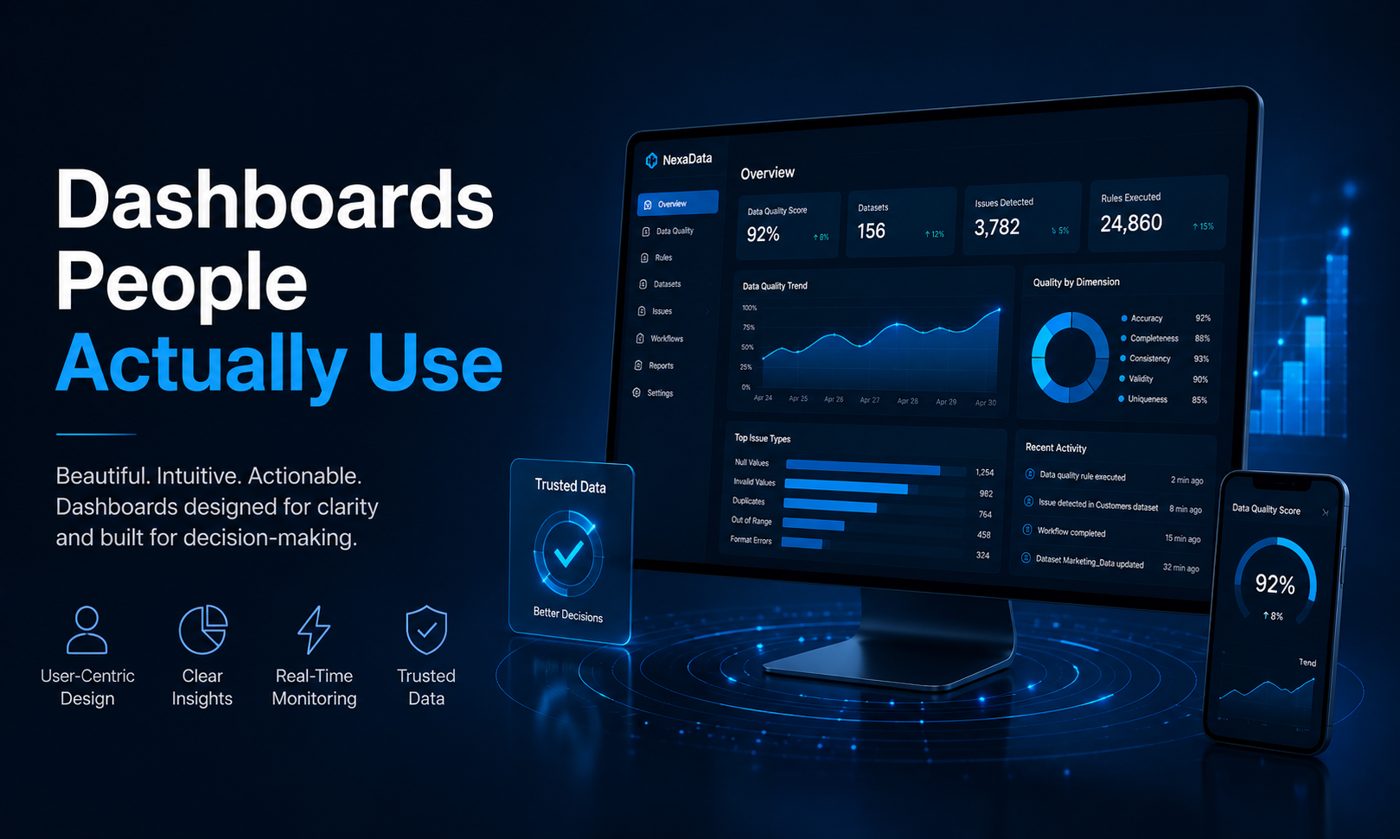
A dashboard is not a data dump
Many dashboards fail because they try to show everything. Decision-makers do not need every table, chart, and filter at once. They need a clear view of what changed, what matters, where action is needed, and what evidence supports the conclusion.
Start from decisions, not visuals
The best dashboard design starts by asking what decisions the team needs to make. Once the decisions are clear, indicators, filters, drill-downs, and visuals can be designed around real use cases instead of decorative metrics.
Refresh reliability matters
A beautiful dashboard loses trust quickly if it is not refreshed on time or if users do not understand the source of the data. Reliable refresh workflows, data ownership, and update notes are part of the product, not an afterthought.
People use dashboards they can explain
Dashboards become useful when teams can explain what the numbers mean, how they were calculated, and what actions they suggest. The goal is not only visualization; the goal is shared understanding.