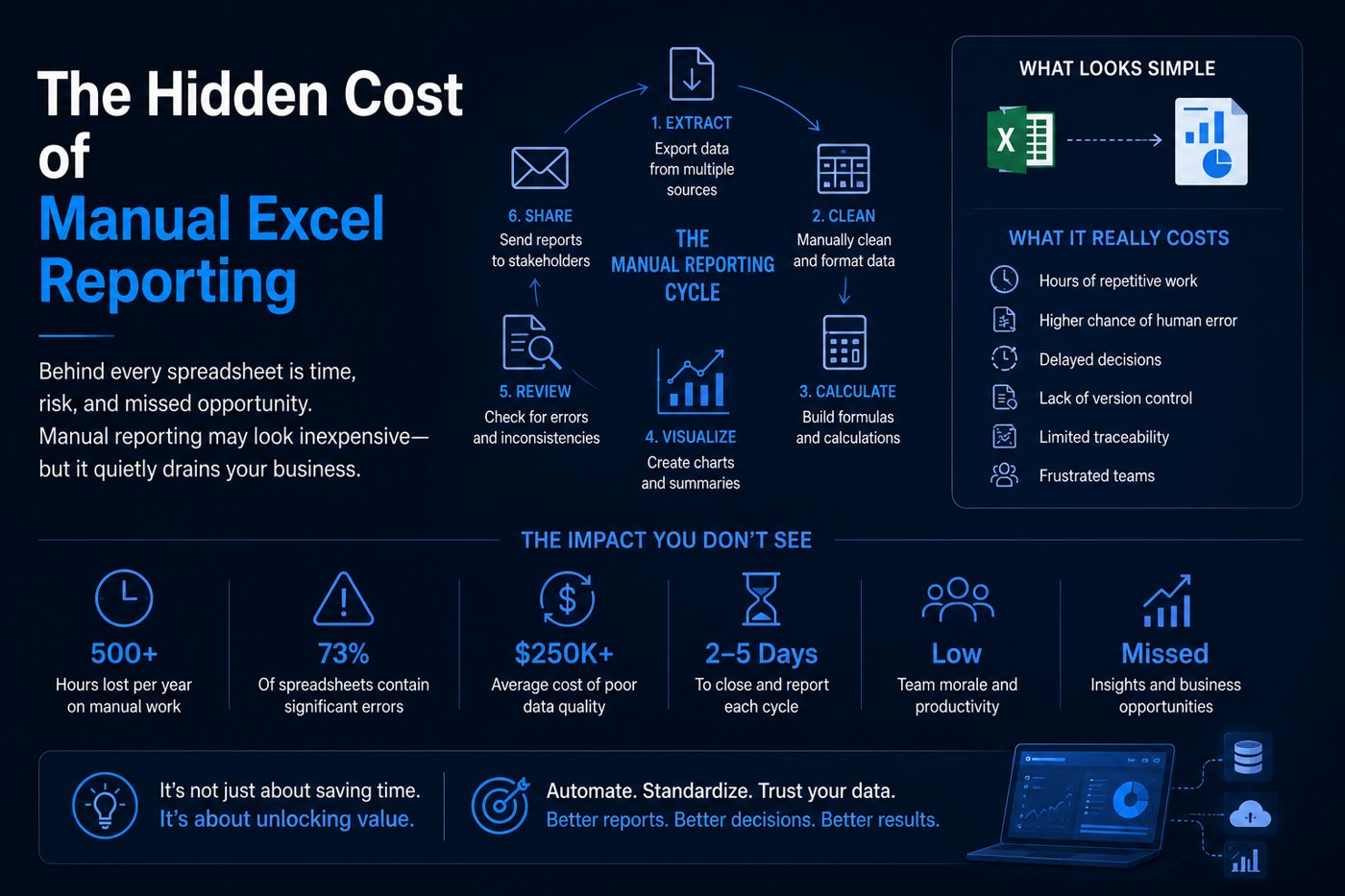
Manual reporting looks cheap until it scales
Excel is powerful and practical, but manual reporting workflows can become expensive when teams depend on repeated copying, formatting, merging, and checking across multiple files.
The real cost is not only time
Manual reporting creates hidden costs: formula errors, outdated files, inconsistent definitions, missing review steps, and unclear ownership. These issues reduce trust in the final numbers.
Automation should target repetition first
The best automation does not try to replace every tool. It starts by reducing repeated tasks: cleaning templates, validating fields, consolidating files, refreshing dashboards, and generating routine outputs.
Excel can stay, but the workflow must improve
Many organizations still need Excel. The goal is not always to remove it. The goal is to connect it to better validation, clearer structure, controlled templates, and more reliable reporting processes.